Colorado FHA 203(k)
Renovation Loan
Exploring FHA 203(k) Loans for Your Home Purchase Journey
Colorado offers plenty of opportunities for homebuyers looking to transform a fixer-upper into their dream home — and a 203(k) loan could be the perfect way to make it happen!
FHA 203K LOAN
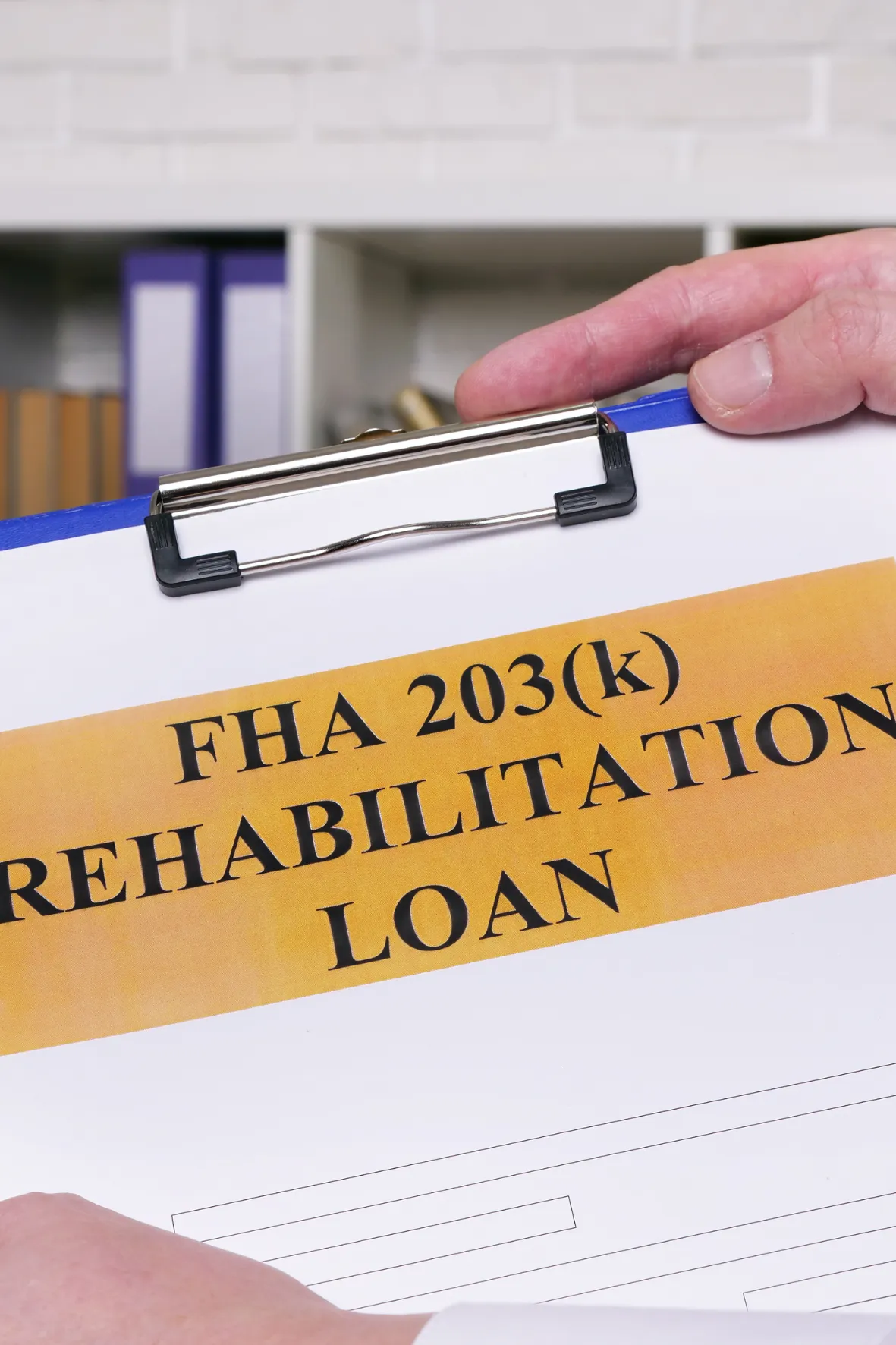
Many of the best-priced homes in Colorado Springs and Denver need work.
An FHA 203(k) loan lets you buy one of those homes and finance the repairs in the same loan, with as little as 3.5% down.
Instead of draining your savings or taking out a separate renovation loan, you roll the cost of updates into your mortgage and make one monthly payment.
It works for buyers and for homeowners who want to renovate the home they already live in.
You'll need a 580+ credit score, a licensed contractor, and an itemized bid for the work. I'll walk you through the rest.
My Relentless Commitment Is To Provide You With
The Best Possible Services
To qualify for a 203(k) loan in Colorado, you need a 580+ credit score, a 3.5% down payment, and a detailed renovation plan from an FHA-approved contractor.

How do FHA 203(k) Loans
Work?
An FHA 203(k) loan lets you buy (or refinance) a home and pay for its renovations with one mortgage, one closing, and one monthly payment.
Here's how it works:
1. You choose a home and a licensed contractor, who writes an itemized bid for the work.
2. The appraiser values the home based on what it will be worth after the renovations are done.
3. At closing, the purchase is paid and the renovation funds go into an escrow account.
4. Your contractor is paid in draws as each stage of work is completed and inspected.
There are two versions. The Limited 203(k) covers non-structural updates up to $75,000, like kitchens, baths, flooring, roofs, and HVAC. The Standard 203(k) handles larger or structural projects and uses a HUD consultant to manage the scope and inspections.

What are the requirements for an FHA 203(k) loan in Colorado?
A 203(k) follows standard FHA guidelines, plus a few renovation-specific rules:
- Credit score of 580 or higher with 3.5% down (500–579 requires 10% down)
- Down payment based on the purchase price plus renovation costs; gift funds are allowed
- The home must be your primary residence (1–4 units)
- U.S. citizen or permanent resident
- Two years of steady income and a debt-to-income ratio that fits FHA guidelines
- A licensed, insured contractor and an itemized bid before the appraisal
- Total loan within the 2026 FHA limit: $541,650 in El Paso County, $862,500 in the Denver metro
Not sure where you stand? I'll review your numbers before you start making offers.
Comparing 203(k) Loans to Other Mortgage Options
A 203(k) is one of three ways to finance a fixer-upper. Here's when each one makes sense:
- FHA 203(k): Best for low down payments, credit scores from 580 to about 680, or structural repairs. FHA mortgage insurance usually stays for the life of the loan.
- VA renovation loan: Best for eligible veterans. $0 down and no monthly mortgage insurance, with repairs typically capped at $100,000.
- Conventional renovation loan: Best with strong credit and 5% or more down. Mortgage insurance can be removed once you reach 20% equity.
As a broker, I can price all three on your file and show you which one costs less over time.
FHA 203(k) Renovation Loan FAQ: Colorado
Answers to the questions buyers ask most before financing a fixer-upper with an FHA 203(k) along the Front Range. Figures are current for 2026.
What is an FHA 203(k) loan and how does it work?
It's an FHA-insured mortgage that combines the purchase price of a home and the cost of renovations into one loan. You close once, and the renovation money goes into escrow and is paid to your contractor in draws as the work is completed and inspected. It's built for older or dated homes along the Front Range that need work before they feel like home.
What's the difference between the Limited and Standard 203(k)?
Limited 203(k): for non-structural work up to $75,000, like kitchens, baths, flooring, roofs, windows, HVAC and paint. A HUD consultant is optional, and the work must be finished within 9 months.
Standard 203(k): for bigger or structural projects, like foundation repairs, additions or major systems, with a minimum of $5,000 in repairs. A HUD-approved consultant is required to write the scope and inspect draws, and the work must be finished within 12 months.
What renovations does a 203(k) cover?
Almost anything that makes the home safer, more livable or more energy efficient: roofing, plumbing, electrical, HVAC, kitchens, bathrooms, flooring, windows, accessibility upgrades and, with the Standard 203(k), structural repairs and additions. Luxury items like a new pool, hot tub or outdoor kitchen aren't eligible.
How much do I need to put down, and what credit score do I need?
The same as a regular FHA loan: 3.5% down with a credit score of 580 or higher. The down payment is figured on the total project cost, meaning purchase price plus renovation costs, not just the price. Gift funds can cover it.
How is the loan amount and "after-improved value" figured?
The appraiser reviews your contractor's bid and estimates what the home will be worth once the work is done, based on comparable renovated homes nearby. Your maximum loan is based on the lower of the purchase price plus renovation costs, or 110% of that after-improved value, and it must stay within the FHA loan limit for your county.
What are the 203(k) loan limits in Colorado Springs and Denver?
A 203(k) uses the same limits as any FHA loan. For a single-family home in 2026 that's $541,650 in El Paso and Teller counties and $862,500 in the Denver metro counties. See my FHA loan page for other counties.
Do I need an FHA-approved contractor?
There's no official FHA list of approved contractors, but your contractor has to be licensed and insured, and the lender has to accept them. They'll provide a detailed, itemized bid and a timeline. Most lenders don't allow do-it-yourself work, and it's rarely worth the hassle. I can point you to contractors who know the 203(k) draw process.
Can I live in the home during the renovation?
Often, yes, if it stays safe and livable. If it won't be, the Standard 203(k) lets you finance up to six months of mortgage payments into the loan, so you aren't paying rent and a mortgage at the same time.
Can I use a 203(k) to renovate a home I already own?
Yes. You can refinance your current FHA or non-FHA mortgage into a 203(k) and roll the renovation costs in, as long as the home is your primary residence. It can be a single-family home or a 2–4 unit property you live in.
Who can get an FHA 203(k)?
Any buyer who will live in the home as a primary residence, not just first-time buyers. Since May 2025, FHA loans, including the 203(k), are limited to U.S. citizens and permanent residents.
Should I use a 203(k), a VA renovation loan, or a conventional renovation loan?
If you're a veteran with entitlement, start with a VA renovation loan: $0 down and no monthly mortgage insurance. With strong credit and 5% or more down, a conventional renovation loan can avoid FHA's lifetime mortgage insurance. The 203(k) shines when you want a low down payment, have credit in the 580–680 range, or need bigger structural work. I'll compare all three on your file.

Answers by Vic Malone, CAPT, USN (ret), Broker Owner of Peak Seven Mortgage.
VA loan specialist and continuing education instructor on the VA Home Loan program for real estate agents. NMLS #1084279.
Peak Seven Mortgage LLC, Company NMLS #1712479. Vic Malone, NMLS #1084279. 102 S. Tejon Street, Suite 1100, Colorado Springs, CO 80903. Equal Housing Opportunity. This information is general education, not a commitment to lend. Loan limits, fees and program rules reflect 2026 figures and can change; all loans are subject to credit, income and property approval. Last reviewed November 2026.
Testimonials
WHY People TRUST and LOVE Us

NMLS # 1084279
102 S Tejon Street, # 1100
Colorado Springs, Colorado, 80903
Call: 719-304-4900
Mon-Fri: 8am-7pm
Sat-Sun: 11am-4pm